Fight time blindness with data, not willpower
ADHD makes it hard to feel time passing. A simple time tracker gives you the external clock your brain doesn't have: one tap to switch activities, no complex setup, no guilt when you forget.
Time works differently with ADHD
For people with ADHD, time isn't a steady stream; it's elastic. Hyperfocus makes 3 hours feel like 30 minutes. A boring task makes 10 minutes feel like an hour. The gap between perceived time and actual time creates chaos: missed deadlines, skipped meals, forgotten appointments, and sleep pushed later and later.
Most productivity tools assume you can estimate how long things take and plan accordingly. That's the exact skill ADHD makes difficult. Timetracker takes a different approach: don't plan, just observe. Track what you actually do, and let the patterns speak for themselves.
Designed for how ADHD actually works
One tap to switch
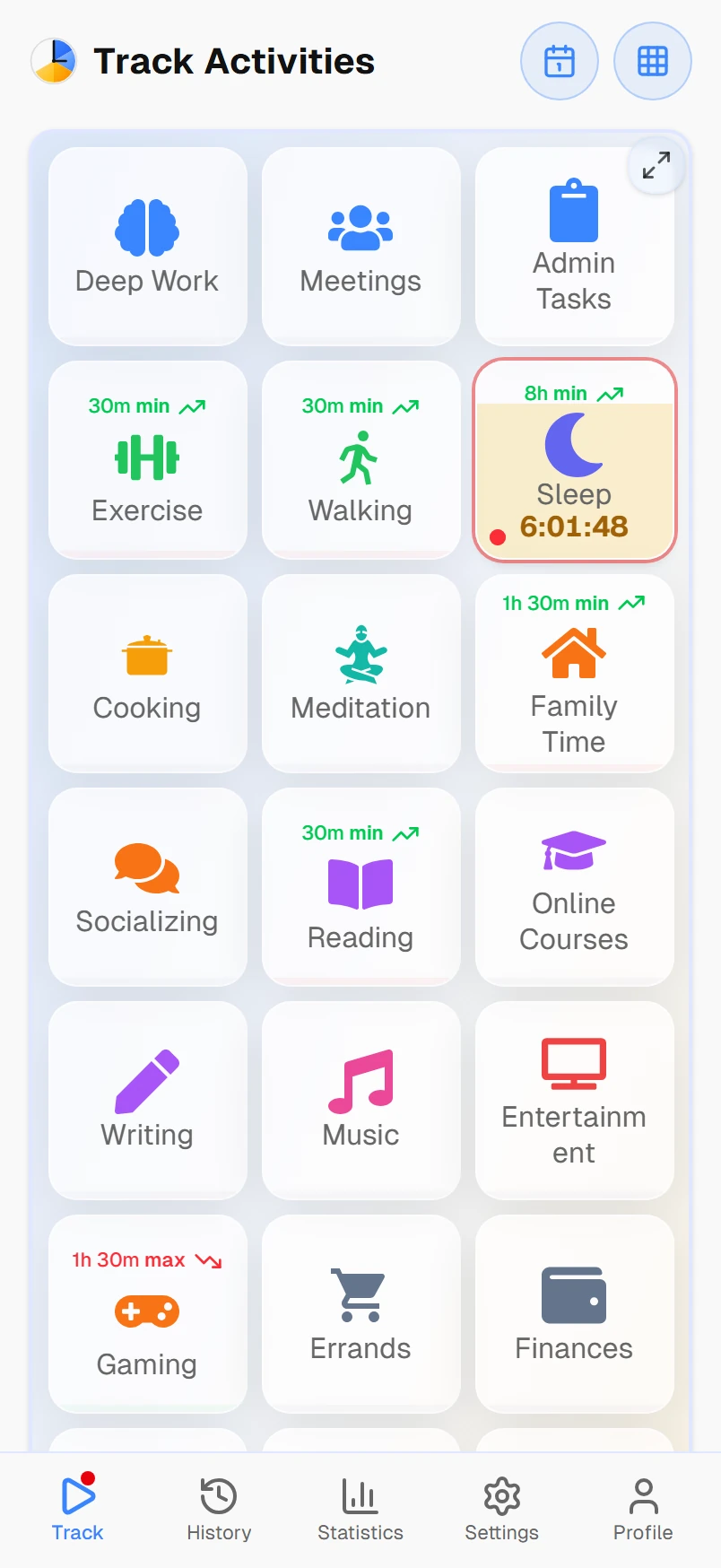
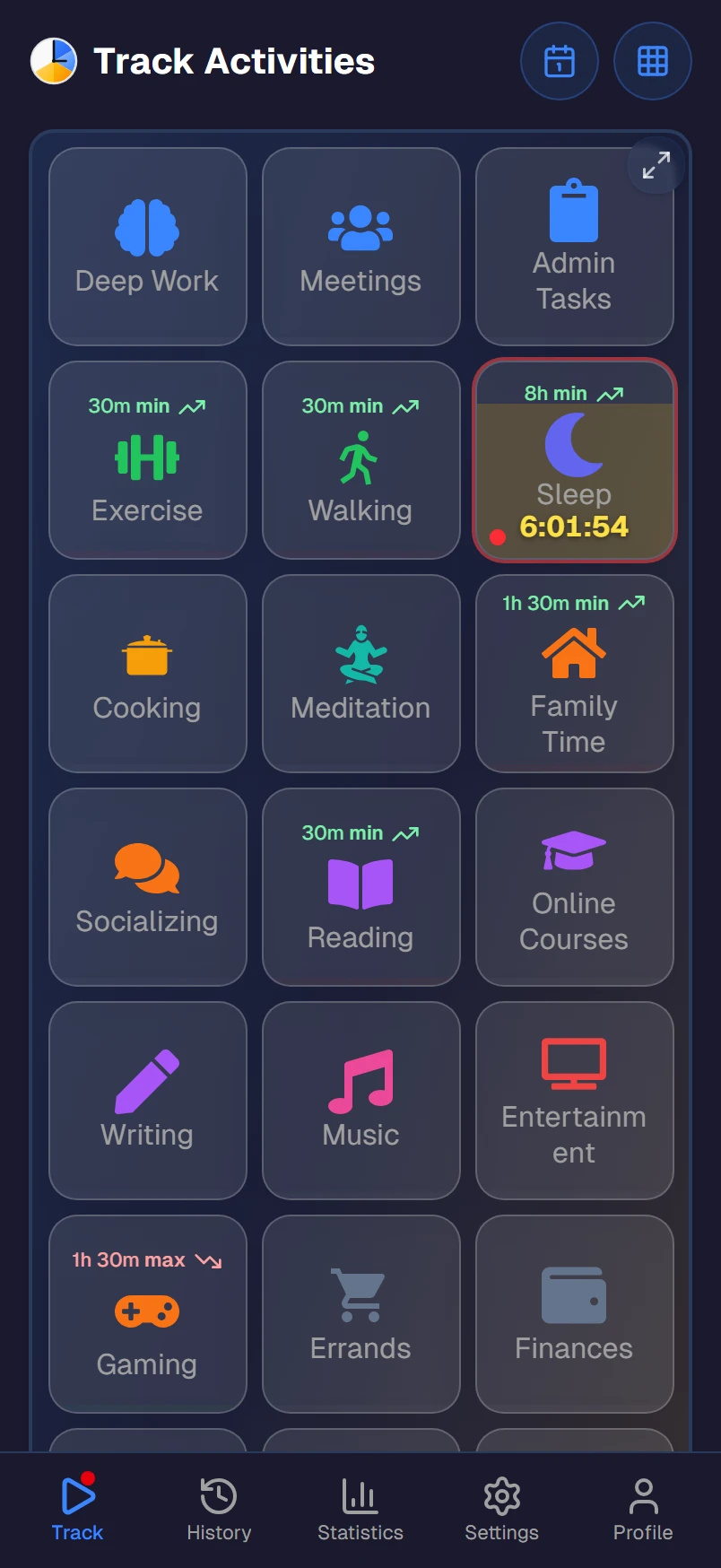
No start/stop buttons, no forms to fill out, no confirmation dialogs. Tap the new activity: the old one stops, the new one starts. If switching takes more than one tap, ADHD brains won't do it.
Fight time blindness
Your internal clock says it's been 20 minutes. It's been 2 hours. Timetracker gives you an external record of where time actually goes, so you stop guessing and start knowing.
Persistent notification
A notification on your phone always shows what you're tracking and how long it's been. Glance at your lock screen for instant time awareness without opening the app.
No gaps, no guilt
Forgot to switch activities? The timeline stays continuous. You can adjust boundaries later with a simple drag. No lost data, no guilt about forgetting: the system is forgiving by design.
Simple structure
Categories (Work, Health, Sleep, Hobbies) give your day gentle structure without rigid schedules. You're not planning, you're observing. Structure emerges from data, not from forcing yourself into a system.
Non-judgmental data
No productivity scores, no streaks to break, no red warnings. Just a neutral breakdown of where your time went. You decide what's good enough; the app doesn't judge.
ADHD challenge → how Timetracker helps
- Time blindnessPersistent notification shows elapsed time. Weekly reports show actual vs. perceived time.
- Task switching chaosOne-tap switching makes transitions instant. No friction to lose momentum.
- Forgetting to trackContinuous tracking means there are no gaps. Adjust boundaries later if needed.
- Overwhelm from complex appsNo projects, clients, invoices, or settings mazes. Just categories and activities.
- Hyperfocus spiralsThe notification timer shows how long you've been on something. A gentle external check.
- Guilt about "wasted" timeNo productivity scores or judgment. Just data. You define what balance looks like for you.
Frequently asked questions
Why is time tracking helpful for people with ADHD?
ADHD often causes time blindness — difficulty sensing how much time has passed or estimating how long tasks take. Time tracking creates an external record of where time actually goes, replacing the unreliable internal clock. Over time, this builds better time awareness without relying on memory or guessing.
What is time blindness in ADHD?
Time blindness is the ADHD-related difficulty in perceiving the passage of time accurately. A task that took 2 hours might feel like 20 minutes (hyperfocus) or vice versa. It's not laziness or poor planning — it's a neurological difference in how the brain processes time. External tools like time trackers help compensate for this.
What makes a good time tracker for ADHD?
Low friction is essential. If switching activities takes more than one tap, ADHD brains will abandon it. Timetracker uses one-tap switching with no start/stop buttons, confirmation dialogs, or manual entries. Persistent notifications show the current activity, and the app tracks continuously so forgetting to start a timer doesn't create gaps.
Will I actually stick with time tracking if I have ADHD?
That depends on friction. Complex apps with lots of setup get abandoned quickly. Timetracker is designed to be as low-friction as possible — one tap to switch, persistent notification reminders, no gaps if you forget. Many users find that the visual feedback (seeing their day broken down) is motivating enough to maintain the habit.
Can time tracking help with ADHD task paralysis?
Yes, indirectly. When you're stuck, just tapping an activity reduces the decision to a single action rather than planning your whole day. It also removes the pressure of 'starting perfectly' — you're always tracking something, so switching to a productive activity is just one tap away.
Is Timetracker free?
Yes. Every current feature is free, with no ads. Works on Android, iOS, Windows, Mac, Linux, and any web browser.