Where did the day go?
It's 9 PM. The kids are asleep. You're exhausted but can't point to what you actually did all day. Track everything (work, kids, household, and the personal time you keep promising yourself) and finally see where the hours go.
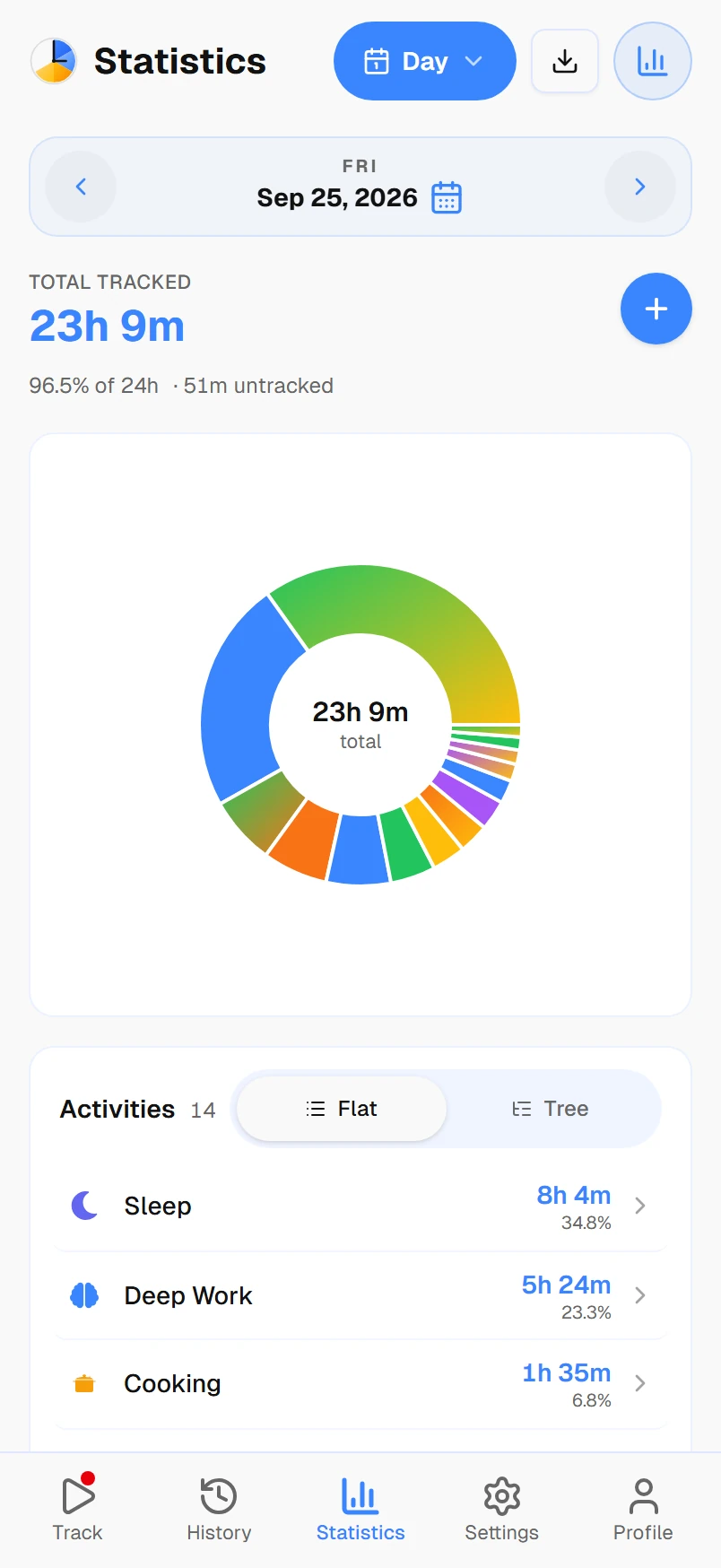
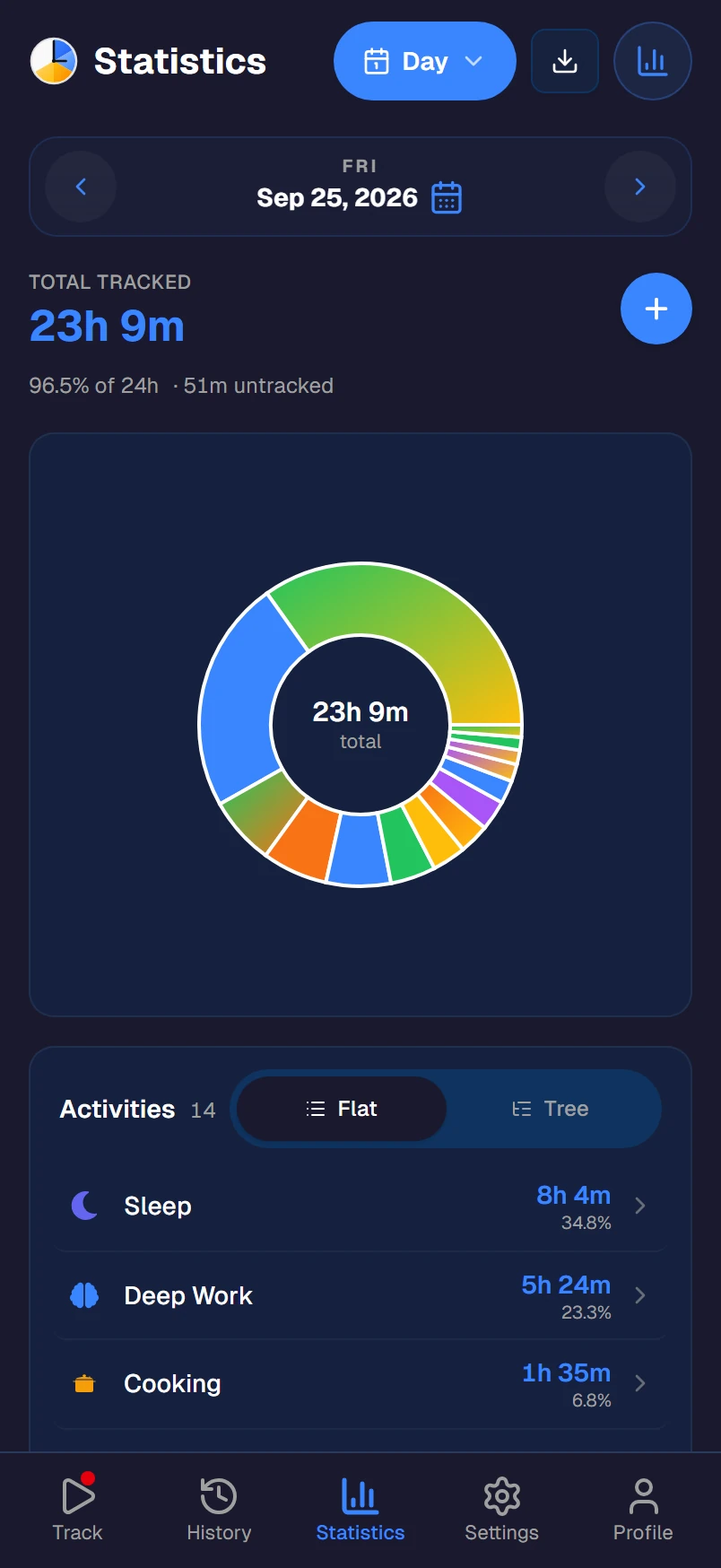
Parenting is a full-time job on top of your full-time job
Between work, school runs, meals, homework, bedtime routines, household chores, and keeping everything organized, parents routinely put in 80+ hours a week of combined work, paid and unpaid. But because half of it is invisible (no one invoices for packing lunches), it feels like the day just... evaporated.
The biggest casualty? Your own time. Exercise, hobbies, friendships, rest: these get squeezed to near zero. And because you can't see it happening in real time, you don't realize until you're burned out.
Why parents track their time
See where the day goes
It's 9 PM and you feel like you did everything but accomplished nothing. Tracking shows the truth: 2 hours of school runs, 3 hours of meals and cleanup, 1 hour of homework help. The day didn't disappear; it was full of invisible work.
Track the invisible load
Scheduling appointments, packing lunches, remembering picture day, signing permission slips. The mental load is real work that takes real time. Create a 'Planning & organizing' activity and watch the hours add up.
Protect your own time
Parents put themselves last. Set a small personal time goal (even 30 minutes a day for exercise, reading, or just sitting in silence). When it shows up (or doesn't) in your weekly report, you take it more seriously.
Make household work visible
Cooking, cleaning, laundry, groceries, repairs. Track it all. When one parent does 15 hours of household work and the other does 3, the data makes the conversation about sharing easier than feelings ever could.
Compare workloads fairly
Both parents track their week separately, then compare. No arguing about who does more: the numbers speak. This turns resentment into a productive conversation about redistribution.
One tap, zero extra work
You're already juggling too much. Switching activities takes one tap: no forms, no notes, no thinking. Keep your phone in your pocket and tap when you shift. 2 seconds per switch, that's it.
A working parent's actual week
168 hours. Here's where they typically go:
| Category | Hours | %% of week |
|---|---|---|
| Work | 40h | 24% |
| Childcare | 25h | 15% |
| Household | 14h | 8% |
| Sleep | 42h | 25% |
| Commute & errands | 10h | 6% |
| Personal time | 3h | 2% |
| Everything else | 34h | 20% |
3 hours of personal time in a 168-hour week. That's 2%. Tracking makes this visible, and fixable.
Frequently asked questions
How can time tracking help busy parents?
Parents often feel like the day disappeared but can't say where it went. Time tracking reveals the actual breakdown — how much goes to work, kids, household tasks, commuting, and (often surprisingly little) personal time. Once you see the numbers, you can make intentional changes: delegate chores, set boundaries at work, or carve out 30 minutes for yourself.
What is the invisible mental load and how do I track it?
The mental load includes all the planning and organizing that keeps a household running — scheduling appointments, remembering school events, planning meals, managing homework. It's real work that takes real time but rarely gets counted. In Timetracker, create activities like 'Planning & organizing' or 'School admin' under a Family category to make this invisible work visible.
I barely have time as it is — won't time tracking add more work?
Timetracker is designed to take zero extra time. You tap once to switch activities — that's it. No forms, no notes, no categories to select. Keep your phone in your pocket and tap when you shift from one thing to another. Most parents find that the 2 seconds per switch saves hours of wondering where the day went.
Can both parents use Timetracker to compare workload?
Each parent can create their own free account and track their day independently. After a week, compare reports side by side. This turns 'I do everything around here' from a feeling into data — which makes the conversation about redistributing tasks much more productive.
How do I find personal time as a parent?
First, track everything for a week. Most parents discover time they didn't realize they were spending — 45 minutes of phone scrolling after kids sleep, 2 hours of low-value errands that could be batched. The data shows you where personal time is hiding. Set a small goal (even 30 minutes a day) and watch your weekly report to hold yourself accountable.
Is Timetracker free?
Yes. Every current feature is free — no ads, no per-user pricing. Works on Android, iOS, Windows, Mac, Linux, and any browser. Both parents can create free accounts.